

Two dwellings or ten lots: an indicative answer on your project within 2 business days.
- Indicative assessment within 2 business days of receiving your plans, costings and approval
- Loans from $200K to $10M for small projects built to sell, or partly kept by your business
- Builders, trade-led developers and companies on their first project or their tenth
- Duplexes, dual occupancies, manor houses, terraces, townhouses and 2 to 10 lot subdivisions, on Torrens or strata title
- Full-doc (tax returns), low-doc or alt-doc (BAS, bank statements or an accountant's letter instead) and no-doc options across our 90+ lender panel
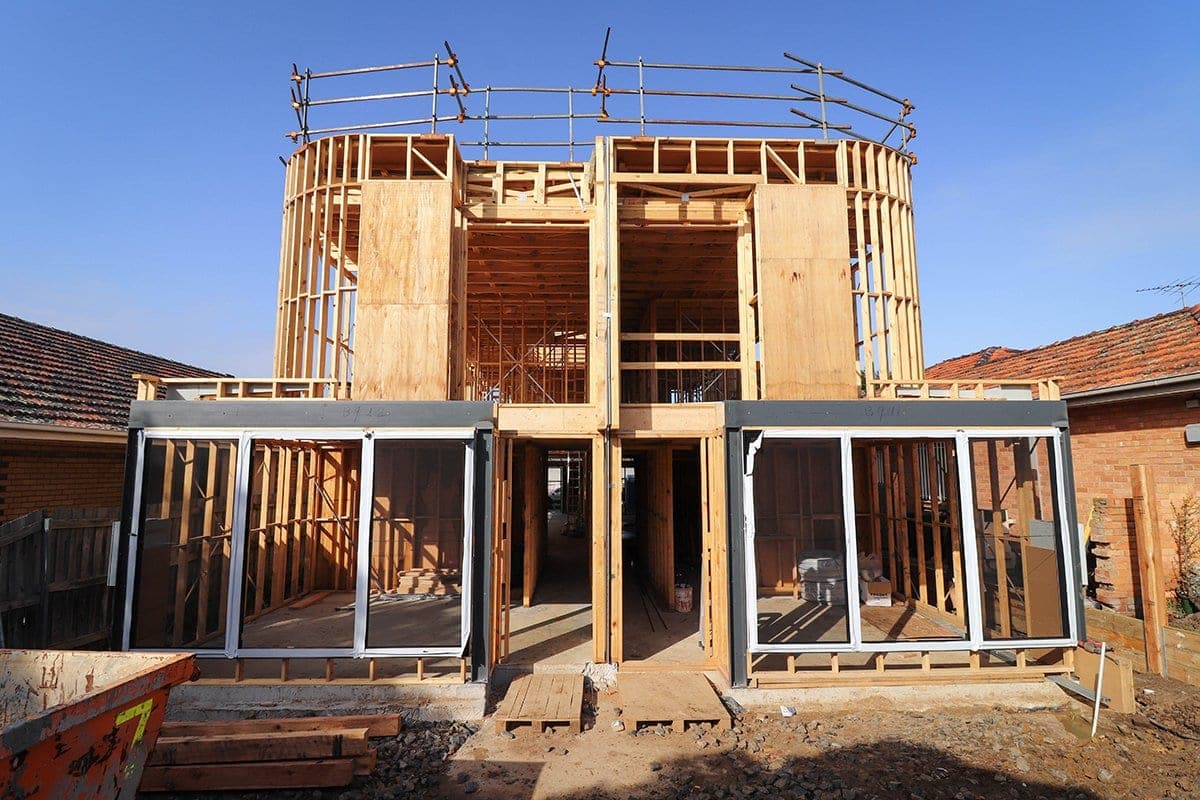
You have the site, the drawings and an approval in hand or close to it. The project is modest in size, and you may be running much of it yourself. Small-scale development finance pays for the build of two to ten dwellings or lots, released in stages as the work is done. It is repaid from the sales, or by a refinance once titles are issued. Projects of this size fall between a one-house construction loan and a large development facility, and lenders read them in different ways. Joseph Farhat and his team can match your project, and the paperwork you can produce, to the lenders whose policy suits it.
Who we can help access finance
- A builder with a knockdown site in a low density residential (R2) zone, putting up a dual occupancy to sell both sides on completion.
- A developer holding council approval for four townhouses on a strata plan, who needs the land loan paid out and the build funded in one facility.
- A small developer splitting a large block into six Torrens lots, with roads, drainage and services to pay for before the subdivision certificate issues.
- A building company that owns a site within an 800 metre walk of a nominated station in Sydney and is costing a terrace project under the Low and Mid-Rise Housing Policy.
- A licensed carpenter or plumber starting a first project of their own, with a fixed price contract and a quantity surveyor (QS) report in hand.
- A company planning to sell three of five townhouses and keep two, which needs a lender comfortable with a mixed sale and refinance exit.
How Small-Scale Development Finance Works
The facility usually covers the land, or pays out the loan already on it, plus the build, council contributions, consultants, a contingency and the interest during construction. Lenders test the amount two ways. The first is loan to cost (LTC), the loan as a share of the total project cost. The second is gross realisation value (GRV), what the finished project is expected to sell for. Funds are paid out as stages are completed and certified by a QS or the valuer. Many lenders add the interest to the loan balance during the build, so there are no monthly repayments until sales settle. The loan is cleared as each dwelling or lot sells, or by a longer-term loan on any you keep.
A development application (DA) is assessed by the council on its merits against local planning controls, and NSW reports an average determination time of 70 days. A complying development certificate (CDC) is a fast-track approval for projects that meet state codes, issued by the council or an accredited certifier in as little as 20 days. In NSW, the Low-Rise Housing Diversity Code is current and lets dual occupancies, manor houses and terraces of up to 2 storeys go through as complying development, in R1, R2, R3 and RU5 zones where the local plan already permits that housing. The Low and Mid-Rise Housing Policy also allowed dual occupancies and semi-detached homes in R2 zones across NSW from 1 July 2024. From 28 February 2025 it added controls for dual occupancies, terraces, townhouses and apartments within an 800 metre walk of nominated town centres and stations in Sydney, the Central Coast, Illawarra-Shoalhaven and the Hunter. Your planner or certifier can confirm what applies to your site, and if you already hold an approval, check the consent's lapse date with your planner.
Joseph Farhat and his team read the approval, the costings and the sales evidence, then put the project to the lenders on our 90+ bank, non-bank, and specialist panel whose limits fit it. We are a finance broker, not a town planner, accountant or tax adviser. Planning, title and GST questions go to those professionals first.
What Lenders Assess for Small-Scale Development Finance
Approval in place
Total project cost
GRV evidence
Presales
Builder and contract
Experience
The exit
The Small-Scale Development Finance Process: What to Expect
- Send Joseph Farhat and his team the site address, the approval or the planned pathway, and your rough costings. You will hear early whether the numbers look fundable.
- Provide the approved plans, the building contract or quotes, a QS report if you have one, any sale contracts, and your financials or bank statements.
- We take the project to the lenders on the panel whose LTC, GRV and presale settings fit it, and set out the rate, fees and equity each would need.
- The chosen lender orders a valuation and a QS review, then issues an approval with the limit, drawdown schedule and conditions. You read it with your solicitor and accountant before signing.
- Funds are released stage by stage as the build is certified. Once titles issue, sales settle or the kept dwellings move to a longer-term loan, and the facility is repaid.
Indicative Finance Options
| Lender Type | Indicative Rate | Max LTC | Typical Loan Range | Loan Term | Key Consideration |
|---|---|---|---|---|---|
| Bank | From ~6.5% p.a. | Up to 70% of total cost | $500K to $10M | 12 to 24 months | Full financials and presales or strong income usually required |
| Non-Bank Lenders | From ~8.5% p.a. | Up to 80% of total cost | $200K to $10M | 6 to 24 months | Reduced or nil presales considered; low-doc and alt-doc options |
| Private Finance | From ~1% per month | Up to 85% of total cost | $300K to $10M | 6 to 18 months | Available for unique scenarios |
Indicative figures only. Actual rates and terms depend on your project, financial position, property location, and lender assessment at the time of application. Rates are subject to change.

























